How to Choose the Right Gemstone Based on Your Budget
Your gemstone budget matters more than the final invoice total. It determines which products are realistically available, how large the stone can be, and which quality tier it falls into. It also indicates whether the gemstone is likely natural and untreated, enhanced, or lab-grown. Even a small change can affect the price of a gemstone per carat significantly.
Per-carat prices range from around $100 for commercial-grade stones to thousands of dollars for fine sapphire and emerald. This means you can buy a low-quality stone with a higher carat or a high-quality stone with a lower carat.
The same amount buys very different things depending on where you put it. Hardness, clarity expectations, and the cost of repairs or recutting all vary by the quality and grade, and rings take far more wear than pendants or earrings.
It’s easier to start your search with a budget than with a color. For example, blue stones include sapphire, aquamarine, topaz, tanzanite, and tourmaline, but their prices vary widely. Treatment status also affects your budget. Most sapphires are heated, and emeralds are often oiled. Lab-grown stones have the same chemistry as natural ones but cost much less, so similar-looking stones can have very different prices. Knowing your budget for each type helps you understand the prices in this blog.
Why Budget Is the Best Starting Point When Choosing a Gemstone?
Gemstone prices are quoted per carat, so once the preferred weight is known, a total budget translates directly into a ceiling on price per carat. That ceiling is the figure every listing gets measured against, and it quickly separates realistic options from those that fall outside the range.
The variety within a single species in the gemstone world is the clearest reason budget is always prioritized. A 2026 collector’s guide lists emeralds from $200 to $20,000 per carat, and sapphires from $100 to $500 for commercial heated stones. Therefore, a species name alone says little about cost, because quality, origin, and treatment decide where an individual stone falls.
A fixed budget also forces a ranking of priorities across colour, clarity, cut, and carat weight, since putting more into one leaves less for the others. Deciding that ranking before browsing keeps comparisons consistent from one listing to the next.
NOTE – The figures in this blog are approximate per-carat ranges from retail and trade price guides published in 2026. They vary from seller to seller and are best read as rough bands rather than fixed rates.
Entry-Level Budget – Gemstones That Offer Beauty at Accessible Prices
The lower end of the market belongs largely to the quartz family, garnet, and peridot. Amethyst, citrine, and smoky quartz are all varieties of quartz, a common mineral that forms in large crystals, so sizeable stones with good colour are easy to find. Amethyst is a Type II stone in the GIA clarity system, meaning some inclusions are expected, but clean material is not hard to come by, and its value depends mostly on how deep and even the purple is. Peridot occurs only in a yellowish-green to olive range, and the more vivid the green, the higher the price. Common almandine garnet stays inexpensive, while rarer varieties like tsavorite and demantoid are priced in a different league.
Lower grades of the precious stones also land in this tier. Retail guides put commercial yellow sapphire at roughly $150 to $500 per carat, light-coloured and heavily included emerald at about $100 to $1,000, and heated commercial blue sapphire at around $100 to $500. Stones at these prices usually have pale or uneven colour, visible inclusions, or both, and they are often enhanced. They suit jewellery bought for appearance rather than rarity.
Mid-Range Budget – Balancing Quality, Size, and Rarity
Topaz, aquamarine, tourmaline and tanzanite fill the middle ground. Aquamarine is a Type I stone, so it is expected to be eye-clean, and its hardness makes it comfortable in a ring. Topaz rates 8 but has a perfect cleavage direction, so it can chip if struck at the wrong angle. Tanzanite is softer and flashes different colours depending on the viewing angle.
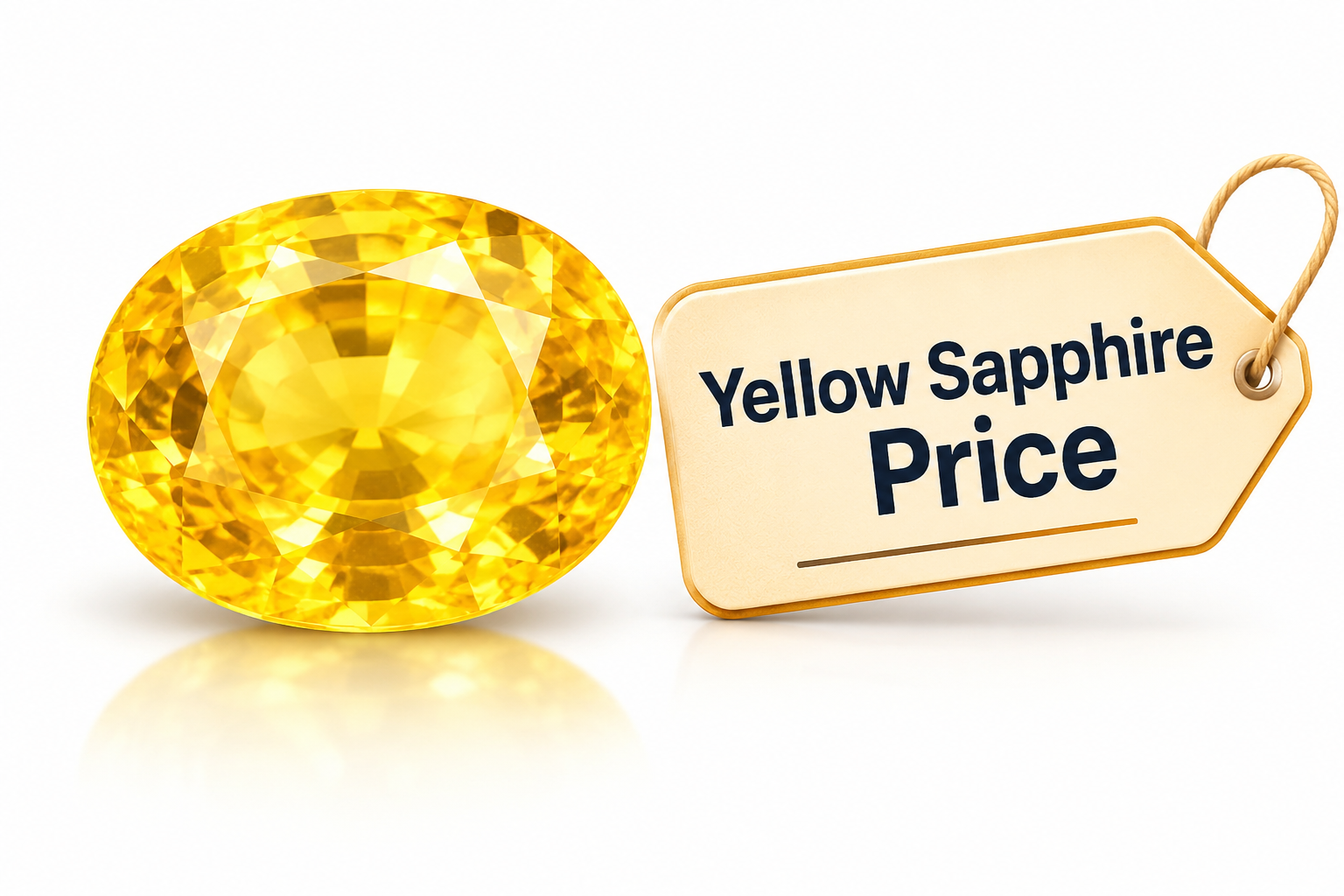
Corundum also starts to appear here. Sapphire is the name for gem-quality corundum in every colour except red, which is ruby, so yellow, pink, orange, and blue sapphires share a mineral and a hardness of 9. Fine, vivid yellow sapphires are typically listed between $500 and $3,000 per carat, and top-color unheated stones reach $1,500 to $3,500 or more. The yellow sapphire price keeps rising with depth of colour, clarity, and origin, and Sri Lankan material generally commands the highest rates.
Fine heated blue sapphires from Sri Lanka also begin to appear in this bracket, at roughly $500 to $2,500 per carat for good colour and clarity. At this level, stones with laboratory reports start to appear more regularly, and the difference between commercial and fine quality becomes visible to the naked eye.
Premium Budget – Investing in Rare and High-Quality Gemstones
At the top of the market sit the classic precious gemstones. Emerald belongs to the beryl family, like aquamarine, but it sits at the opposite end of the clarity scale. As a Type III stone, nearly every emerald contains visible inclusions, often called jardin, and truly eye-clean examples are rare and priced accordingly. The emerald gemstone price depends heavily on origin and quality. One 2026 collector’s guide projects fine one-carat Zambian stones at about $4,000 to $9,000 per carat and Colombian stones at $8,500 to $16,000, a premium of roughly 30% to 60% for Colombian origin at similar quality.
Blue sapphire spreads wider still. Fine unheated Ceylon sapphires with a major laboratory report typically cost $2,500 to $6,000 per carat at one carat and climb steeply with size. Fine unheated Burmese royal blue is listed from about $8,000 to $60,000 per carat. Unheated Kashmir material starts around $20,000 per carat and reaches six figures at auction. The blue sapphire gemstone price therefore depends as much on origin and treatment as on colour, and claims at this level can only be confirmed by a report from a laboratory such as SSEF or Gübelin.
Getting More Value From Any Budget
Gemstone value depends less on the budget size than on how it is split among its quality factors, treatment status, and weight. Several points consistently shape what a given amount buys –
- Treatment status – Heating is the standard enhancement for sapphire, and the trade accepts it when it is disclosed. Fine unheated stones typically command a premium of two to five times an equivalent heated stone, and GIA, SSEF, and Gübelin reports state which category a stone falls into.
- Emerald enhancement – Emerald is routinely treated with oil or resin to fill fractures that reach the surface. Laboratory reports describe how extensive that enhancement is, so a lightly treated stone and a heavily filled one can look alike yet be worth very different amounts.
- Diffusion treatment – Colour is introduced only into a thin surface layer, and it can be lost if the stone is repolished or recut. The trade views this far less favourably than heating.
- Weight thresholds – Price per carat generally rises with size because large, clean crystals are much rarer than small ones, and pricing steps up around 1, 3, and 5 carats. For example, a 3.10-carat yellow sapphire often commands a price per carat 20% to 35% higher than a similar-quality 2.90-carat stone.
- Colour and cut – Colour usually carries the most weight in valuation, with clarity and cut playing supporting roles. A good cut returns light evenly across the face of the stone and makes colour look richer, while a poorly proportioned one leaves dull or washed-out areas even in excellent rough.
- Lab-grown stones – They share the chemical composition and crystal structure of natural gemstones and sell at a fraction of the price, which makes them a legitimate option for buyers who care more about appearance than natural origin, as long as they are sold with clear disclosure.
A smaller, well-cut stone with strong colour therefore often looks better than a larger one cut for weight retention, and a disclosed treatment can bring a fine stone within reach of a budget that an untreated one would exceed.
Common Budget-Related Mistakes Buyers Make While Buying Gemstones
Most budget-related mistakes come from comparing stones on price alone, without the details that explain why two prices differ. The ones that appear most often are:
- Treating a low price as a bargain – A natural, untreated sapphire or emerald at a very low rate usually points to glass, synthetic material, or heavy treatment. Certification from a recognised laboratory exists to separate these cases.
- Spending the budget on carat weight – Putting the whole amount into size often means giving up colour, clarity, or cut, and those factors drive both the beauty and the long-term value of the stone.
- Comparing prices without comparing treatment – Two emeralds with the same listed price per carat can differ sharply in how much oil or resin they contain, and two sapphires can differ in whether they have been heated, so the figure alone says little.
- Skipping certification – Reports from laboratories such as GIA, SSEF, and Gübelin confirm identity, origin, and treatment status, and claims at the higher price levels can only be verified this way.
- Mismatching the species and its use: Opal and tanzanite, with hardness well below sapphire’s 9, need more careful wear in rings than harder stones do, and repairs or recutting add to the original cost.
Avoiding these mistakes keeps a budget working toward the qualities that matter most in a stone, rather than toward a headline price.
The Bottom Line
Each budget level has species that fit it. Quartz, garnet, and peridot cover everyday colour at low prices, topaz, aquamarine, and mid-grade corundum fill the middle, and the classic precious stones reach their best qualities at the top. What most changes a purchase’s value is understanding treatments, origin, and certification, since two stones with the same listed price can be very different purchases.